

Blog

3 Amazing State Parks to Visit Near Rochester, MN

pexels-ruvim-miksanskiy-1630737

Known by locals as “Med City”, Rochester, MN, is located in the southeastern corner of the state. If you are looking for spots to spend some time with your family or a group of friends, go for a hike, or have a picnic, these are some great state parks you can reach in less than an hour by car. Prepare some snacks, fill up your tank, and check out these fantastic destinations.

3 Amazing State Parks to Visit Near Rochester, MN

1. Lake Louise State Park

Covering a surface area of about 700 acres, Lake Louise State Park is a great spot for numerous outdoor activities including picnicking, camping, swimming, hiking, and horseback riding. For Rochester residents, this is a popular weekend and day trip destination that provides plenty of opportunities to get away from the city routine and take in some of the most beautiful sceneries southern Minnesota has to offer.

Lake Louise State Park was established in 1963 as a public recreation area with peaceful campgrounds, well-equipped picnic spots, and seasonal wildflower fields. The main attraction, however, is the 25-acre artificial reservoir located right in the center of the park, which offers excellent boating, swimming, and canoeing opportunities. Lake Louise State Park is located a little over 35 miles south of Rochester and can be reached in about 40 minutes by car.

2. John A. Latsch State Park

Located along the western banks of the Mississippi River and the Wisconsin state line, John A. Latsch State Park is another great destination for Rochester residents looking for spots to spend some time surrounded by nature. This public recreation area covers about 1,650 acres of territory and is managed by the Minnesota Department of Natural Resources. Established in 1925, it is home to significant populations of white-tailed deer, red foxes, coyotes, timber rattlesnakes, and opossums.

Driving from downtown Rochester to the entrance of John A. Latsch State Park takes a little under an hour, heading northeast along route MN-42. Once here, some popular activities include hiking, wildlife watching, and mountain biking. The park is open year round between 8 am and 10 pm. Once you make your way here, make sure to ask for a map and check out the extensive network of hiking trails the place has to offer.

3. Whitewater State Park

Established in 1919 and covering an area of about 1,700 acres, Whitewater State Park is a public recreation area located along the banks of the Whitewater River. Featuring scenic viewpoints, hiking trails, and an expansive campground, it is a perfect spot for a day trip or a weekend escape. This state park is located about 25 miles east of downtown Rochester, making it possible to get here in a little over half an hour by car along Highway 9.

If you are looking for a dealership in the Rochester area to buy a new or pre-owned vehicle, visit us at Rochester Ford and check out our extensive inventory of cars. Book an appointment with one of our expert sales agents and learn more about our different financing plans
Recommended Posts

Expedition Tremor Project Overland: What It Means for Rochester

Ford brought a pretty wild Expedition to the Los Angeles Auto Show this year. It is called Expedition Tremor: Project Overland, and it sits on the show floor through public days that run Nov. 20 to Nov. 29. If you camp, hunt, or just like the idea of driving until the pavement ends, it is worth a look, even from Rochester. One thing up front: you cannot buy this exact SUV. Ford calls it a one-off concept that will not be offered for sale. But a lot of what makes it interesting starts with an Expedition Tremor you can buy, and plenty of the add-on gear is already out there. What is Project Overland? Ford built it with Fox Factory Vehicles, the upfitting arm of the suspension company. They started with a 2025 Expedition Tremor, which already comes with Raptor-inspired running boards, modified skid plates and up to 10.6 inches of ground clearance. Then they kept going: A 2-inch lift with FOX 2.0 Performance Series coilovers Raptor R wheels with BFGoodrich All-Terrain T/A KO2 tires A modular F-150 Tremor front bumper with a hidden winch mount and a WARN winch An upgraded intercooler to make room for the winch and keep the EcoBoost engine cool RIGID ditch and roof lights, plus scene lights for setting up camp after dark TRED Pro recovery boards for when traction runs out A Yakima SkyRise HD rooftop tent, an awning and liftgate side curtains F-150 Tremor overhead upfitter switches to run the lights and camp gear Ford's Expedition brand manager told reporters the truck is a test bed for future product ideas, and that Ford wants customer feedback on it. So if you like what you see, that is the point. What you can actually get today The base of this build is the Expedition Tremor, and that is a real model you can shop. It gives you the trail hardware Ford designed for it, including the running boards, skid plates and Trail Control, a low-speed cruise control for off-road driving. Ford also said that a good number of the parts on Project Overland are available through its customization program. Some are Ford parts, some are third-party brands, and availability changes, so we will not promise a part number in a blog post. Our parts team can look up what fits your Expedition and what it takes to install. A word of caution on building your own. Ford notes the concept includes third-party parts and modifications that may affect compliance with safety standards and other laws. Lifts and larger tires can also change how a vehicle drives and what is covered under warranty. Talk to us before you order a pile of parts, and we will tell you straight what makes sense. Why it fits life around Rochester Southeast Minnesota is not Moab, but it has its own kind of rough. Gravel roads into the Whitewater valley, muddy access roads in the fall, deer camp up north, and a lot of snow. A big three-row SUV with real ground clearance and a 4x4 system that can handle that, and still haul the family to practice on a Tuesday, is a good fit. That is what Expedition Tremor is built for, and Project Overland just shows how far you can take it. If you are not sure whether you need Tremor hardware or just a well-equipped Expedition, our AWD vs. 4WD guide for Minnesota drivers is a good place to start. For more on the current model year, read what we know about the 2027 Expedition. Shop Expedition at Rochester Ford Browse new Expedition inventory See all new Ford SUVs Ask our parts department about Ford accessories for your build Stop by Rochester Ford on Highway 52 in north Rochester and ask to see an Expedition Tremor Frequently asked questions Can you buy the Ford Expedition Tremor Project Overland? No. Ford says Project Overland is a one-off concept that will not be offered for sale. It was built on a 2025 Expedition Tremor, which is a model you can buy. Where can I see Expedition Tremor Project Overland? Ford is showing it at the Los Angeles Auto Show at the Los Angeles Convention Center during public days, Nov. 20 through Nov. 29, 2026. Who built Project Overland? Ford built it with Fox Factory Vehicles, using Ford Design and Ford Customization teams. What does the Expedition Tremor come with? Ford lists Raptor-inspired running boards, modified skid plates and up to 10.6 inches of ground clearance on Expedition Tremor, along with Trail Control. Can Rochester Ford add overland parts to my Expedition? Our parts department can look up which Ford and accessory parts fit your Expedition and explain installation and warranty questions before you buy. Expedition Tremor: Project Overland is a specialty modified concept vehicle that Ford will not offer for sale. Features, packages and accessory availability can change. Aftermarket and accessory parts may affect warranty coverage and compliance with laws. Dealer sets the selling price.

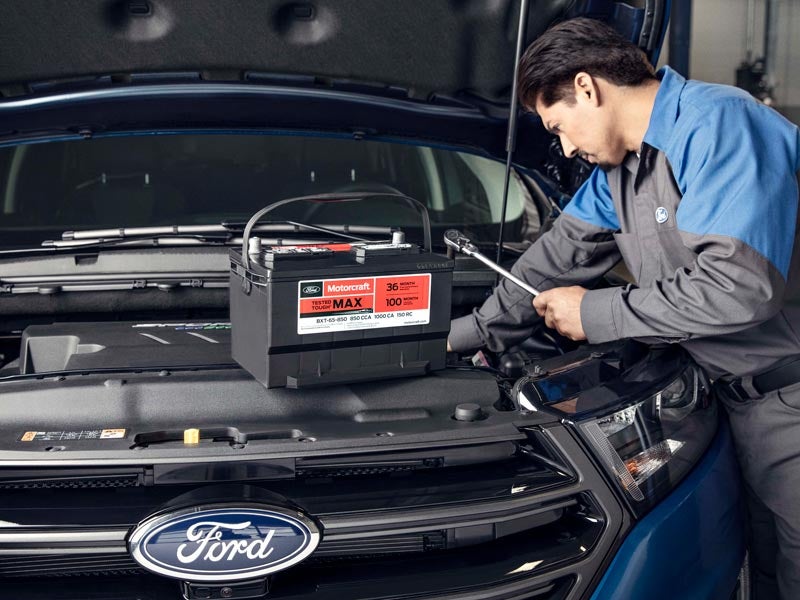
Ford battery service in Rochester, MN

Ford Battery Replacement: Don't Let a Rochester Winter Decide When Your Car Starts

A car battery is a remarkably uninteresting component until the morning it refuses to cooperate. Then, suddenly, it's the most important piece of equipment in the entire vehicle. In Rochester, MN, where winter temperatures routinely plunge below freezing, an aging battery has an unfortunate habit of revealing its weaknesses at precisely the worst moment. Rochester Ford helps local drivers avoid that situation through battery testing, replacement, and charging system inspections. The Battery Does More Than Start the Engine Modern Fords rely on stable electrical power for considerably more than ignition. The SYNC infotainment system, electronic control modules, climate controls, and numerous driver assistance functions all depend on the vehicle's electrical system. A deteriorating 12-volt battery could contribute to unexpected warning messages, sluggish accessories, or unreliable starting. Advanced equipment such as BlueCruise also depends on properly functioning electrical systems, although an illuminated warning doesn't automatically indicate battery failure. Diagnosing the underlying problem is considerably smarter than replacing components on suspicion. Warning Signs Before the Battery Gives Up Slow engine cranking is the classic warning. The starter sounds increasingly reluctant, particularly after the vehicle has been parked overnight. Other symptoms include dimming lights, intermittent electrical problems, and repeated jump-starts. A battery warning lamp deserves special attention because it frequently indicates a charging system fault rather than a failed battery. Cold weather makes the situation worse. Low temperatures reduce available starting power while thickened engine oil increases the effort required to crank the engine. A battery that performed adequately in September might struggle badly during a Minnesota January. Professional Ford battery testing identifies weakness before the vehicle refuses to start. Why Replacement Requires More Than a Wrench Replacing a battery seems simple enough. Disconnect the old one, install the new one, and drive away. Unfortunately, modern vehicle electronics have complicated that once straightforward operation. Technicians first evaluate battery condition and charging performance to distinguish a failing battery from an alternator, wiring, or parasitic electrical problem. The replacement must meet Ford's specified battery type, capacity, and cold-cranking amperage requirements. Many newer models also require a Battery Monitoring System reset following installation. This allows the vehicle to adjust its charging strategy for the replacement battery. Skipping that procedure risks improper charging behavior and reduced battery service life. How Long Should a Ford Battery Last? A conventional 12-volt automotive battery commonly lasts three to five years, although driving conditions produce considerable variation. Repeated short trips prevent adequate recharging, while extreme temperatures accelerate deterioration. Accessories operating while the engine is switched off also consume stored energy. Once a battery reaches approximately three years of service, periodic testing becomes particularly worthwhile. Rochester drivers should consider scheduling Ford battery and charging system inspections before winter arrives. Discovering a weak battery inside a heated service facility is preferable to discovering it in a frozen parking lot. Hybrid Models Need Special Attention Electrified Fords introduce another consideration. Vehicles such as the Maverick Hybrid use a conventional low-voltage electrical system alongside high-voltage propulsion components. The 12-volt battery supports essential electronics and vehicle startup functions, even though the hybrid powertrain operates differently from a conventional gasoline vehicle. Battery location, replacement procedures, and electrical precautions vary by model. Ford-trained technicians have access to vehicle-specific diagnostic equipment and service procedures, helping ensure the correct components are tested without disturbing high-voltage systems unnecessarily. Prepare for Winter at Rochester Ford A dependable battery doesn't make a vehicle more exciting, but it makes every other feature possible. Visit us in Rochester, MN, to get our Ford battery replacement service alongside testing of terminals, cables, and charging components. Drivers experiencing slow starts or unexplained electrical symptoms should arrange an inspection before temperatures fall further.

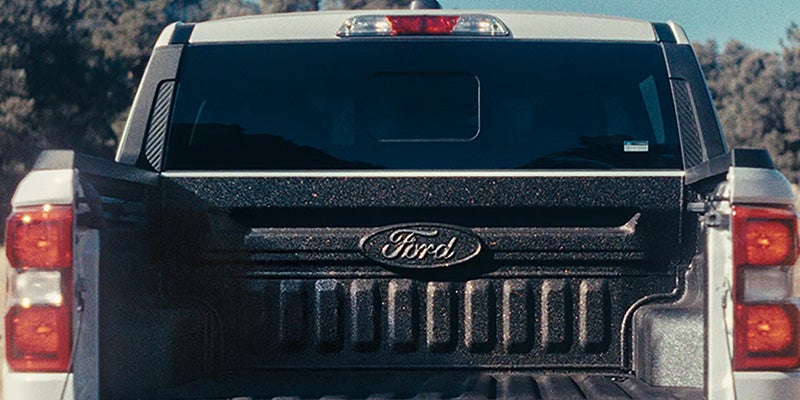
Rear view of the 2026 Ford Maverick pickup truck, highlighting its black tailgate, Ford emblem, integrated rear window, and distinctive taillights.

2026 Ford Maverick® vs. Ranger®: Two Pickups with Very Different Ambitions

There's a peculiar assumption in the truck world that bigger automatically means better. Ford's 2026 Maverick® and 2026 Ranger® offer a convincing argument against that idea. One is a compact pickup designed to squeeze into parking spaces without a three-point negotiation. The other is a midsize truck with serious towing strength and considerably greater off-road capability. At Rochester Ford in Rochester, MN, choosing between them comes down to how much truck you'll regularly put to work. Two Different Ways to Build a Pickup The Maverick uses unibody construction, integrating its passenger compartment and structural platform. This contributes to its carlike driving characteristics and compact proportions. The Ranger employs traditional body-on-frame construction, giving it a stronger foundation for demanding towing and off-road applications. Both accommodate 5 passengers in four-door cabins, although the Ranger occupies more road space. For Rochester drivers negotiating parking garages and crowded streets, the Maverick's smaller footprint is a considerable advantage. The Ranger earns its additional dimensions when heavier equipment or challenging terrain enters the picture. Engine Choices: Efficiency or Extra Muscle? The Maverick's standard 2.5L hybrid produces 191 combined hp, using a continuously variable transmission with standard FWD and available AWD. Its optional 2.0L EcoBoost turbocharged engine develops 250 hp and 277 lbs. ft. of torque, paired with an 8-speed automatic. The Ranger starts with a 2.3L EcoBoost producing 270 hp and 310 lbs. ft. of torque. An available 2.7L EcoBoost V6 raises output to 315 hp and 400 lbs. ft. of torque. At the top, the Ranger Raptor's 3.0L EcoBoost V6 delivers 405 hp and 430 lbs. ft. of torque. Every Ranger uses a 10-speed automatic transmission. That's quite a performance spread between two trucks wearing the same badge. Towing Capacity Reveals the Biggest Difference The Maverick tows up to 4,000 lbs. with the appropriate powertrain and available 4K Tow Package. Maximum payload reaches approximately 1,500 lbs., depending on configuration. Those figures accommodate many small trailers, recreational toys, and household projects. The Ranger increases maximum towing capacity to 7,500 lbs. when properly equipped. Interestingly, the specialized Ranger Raptor tops out at 5,510 lbs. because its suspension and chassis prioritize off-road performance. Buyers comparing Ford Maverick and Ranger towing capacity should check the specific truck's equipment and ratings before selecting a trailer. Cargo Beds Built for Different Jobs The Maverick's 4.5-foot FLEXBED Storage System includes configurable cargo solutions for tools, bicycles, and home improvement supplies. The Ranger provides a 5-foot bed, offering additional length for equipment and materials. Both support available cargo accessories and electrical outlets. Neither bed replaces a full-length work platform, but each offers considerable versatility without requiring a full-size pickup. The Maverick makes loading everyday equipment convenient, while the Ranger provides additional space for larger items. Off-Road Equipment Separates Them Further The Maverick Tremor® introduces specialized AWD hardware and an off-road-tuned suspension for drivers who venture beyond maintained pavement. The Ranger offers an available FX4 Off-Road Package, while the Ranger Raptor moves into considerably more demanding territory. FOX Live Valve dampers, front and rear locking differentials, and specialized suspension components give the Raptor the hardware to tackle serious trails. For snowy Minnesota roads and occasional gravel tracks, the Maverick's available AWD could be sufficient. More challenging recreational terrain favors the Ranger's broader selection of off-road equipment. Technology Without the Size Penalty Every 2026 Maverick features a 13.2-inch SYNC 4 touchscreen with wireless Apple CarPlay and Android Auto compatibility. The Ranger includes a standard 10-inch touchscreen and an available 12-inch display. Both offer Ford Co-Pilot360 driver assistance technologies, with equipment varying by trim. Available Ranger features include a 360-degree camera system, particularly helpful when maneuvering around obstacles or positioning a trailer. Find Your Ford Pickup at Rochester Ford The Maverick proves a pickup doesn't need enormous dimensions to deliver worthwhile capability. The Ranger provides additional towing strength and specialized performance for drivers who need more. Visit us in Rochester, MN, to explore 2026 Ford truck inventory and compare both models. Schedule a test drive to experience their different driving characteristics, then choose the truck whose capabilities match the work ahead.